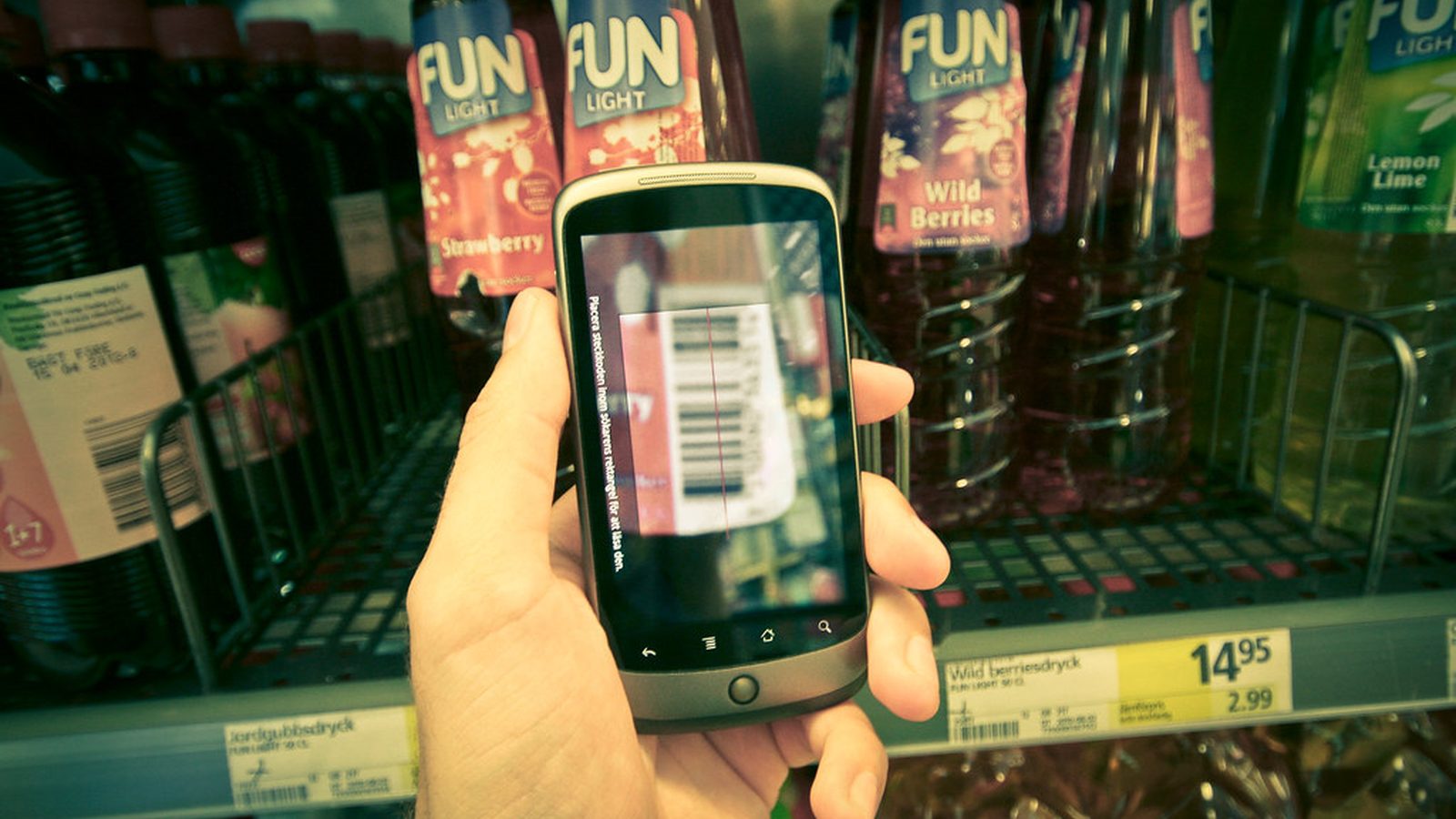
What GTIN, UPC and EAN actually mean, how many digits each has, which barcode carries them, and where retail POS ends and case logistics begins.
The names look like three competing standards. They are not. GTIN is the single identifier GS1 issues, and UPC and EAN are just GTINs of a particular length. Get that straight and the rest is arithmetic.
Data checked: July 22, 2026 against GS1 sources listed below.
| Data structure | Digits | Barcode symbology | Where it is used |
|---|---|---|---|
| GTIN-8 (EAN-8) | 8 | EAN-8 | Small retail items, scanned at POS |
| GTIN-12 (UPC-A) | 12 | UPC-A | Retail POS, mostly North America |
| GTIN-13 (EAN-13) | 13 | EAN-13 | Retail POS, Europe and rest of world |
| GTIN-14 | 14 | ITF-14, GS1-128 | Cases and cartons, not POS |
UPC and EAN are the barcodes you see on a product; GTIN is the number printed under the bars. A GTIN-12 fits inside a UPC-A barcode, a GTIN-13 fits inside an EAN-13, and so on.
Every GTIN is the same three parts, right-aligned to its length:
| Part | What it is |
|---|---|
| GS1 company prefix | Issued by GS1, unique to your company |
| Item reference | Assigned by you, one per product |
| Check digit | One digit, calculated by modulo 10, catches scan errors |
A GTIN-14 adds one more part at the very front: an indicator digit that marks the packaging level, for example a single unit versus a case of twelve. That is the only structural difference between a retail GTIN and a case GTIN.
| Level | Identifier | Barcode | Scanned where |
|---|---|---|---|
| Single retail unit | GTIN-8, 12 or 13 | EAN-8, UPC-A, EAN-13 | Checkout |
| Case or carton | GTIN-14 | ITF-14, GS1-128 | Warehouse, receiving |
A checkout scanner expects a retail GTIN. Point it at a GTIN-14 case code and it will refuse the item, because that number identifies the box, not the product inside.
A UPC is a GTIN. UPC-A is the 12-digit form of the GTIN, also written GTIN-12. GTIN is the general term GS1 uses for all product numbers; UPC and EAN are specific lengths of it.
Length and region. UPC-A is 12 digits and is used mostly in North America. EAN-13 is 13 digits and is used across Europe and the rest of the world. An EAN-13 is a UPC-A with one extra leading digit, so most scanners read both.
For cases, cartons and pallets, not individual retail units. A GTIN-14 adds an indicator digit to the front to mark the packaging level. It is carried by ITF-14 or GS1-128 barcodes and is not scanned at a checkout.
GS1 is the organization that issues the company prefix at the start of every GTIN. That prefix is what makes your number unique worldwide, which is why marketplaces and product feeds ask for a real GTIN rather than one you invent.